
AWS: 90% of AI Agent Prototypes Fail to Reach Production
AWS has revealed that nearly 90% of its AI agent prototypes built two years ago failed to reach production, shedding light on the challenges of scaling AI in enterprise environments. The company’s experience underscores the difficulties of measuring ROI, implementing governance, and aligning AI projects with business outcomes—issues that resonate across the industry.
Editor, LazyFounders
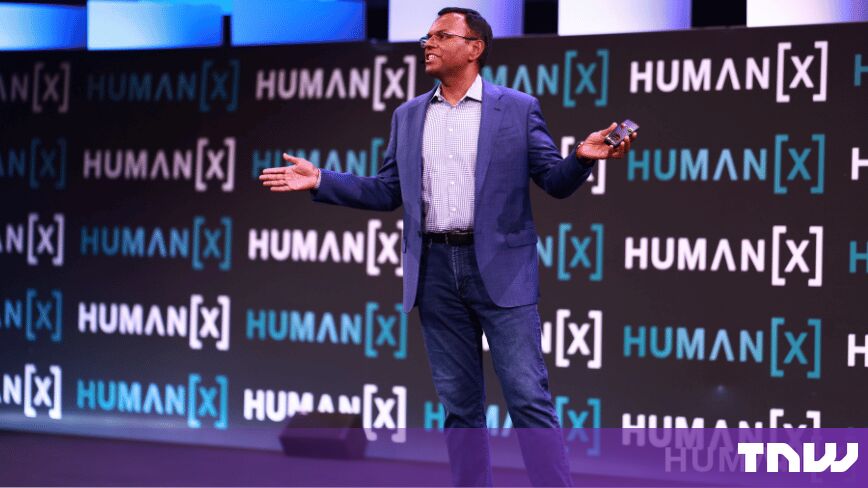

AWS has revealed that nearly 90% of its AI agent prototypes built two years ago failed to reach production, shedding light on the challenges of scaling AI in enterprise environments. The company’s experience underscores the difficulties of measuring ROI, implementing governance, and aligning AI projects with business outcomes—issues that resonate across the industry.
30 SEC SUMMARY
- AWS revealed that nearly 90% of its early AI agent prototypes failed to reach production, highlighting challenges in AI deployment and ROI measurement.
- Only 17% of organizations have successfully deployed AI agents, with just 7% able to measure their ROI, according to AWS.
- Amazon’s internal agentic coding tool, Kiro, is used by over 100,000 engineers and millions of external developers.
- AWS introduced governance frameworks like Strands to improve AI agent reliability and consolidated hosting on Bedrock and AgentCore.
- Nearly 80% of the Fortune 100 use Bedrock, AWS’s fastest-growing service.
TABLE OF CONTENTS
- High Failure Rate in AI Agent Prototypes
- Root Causes of Stalled AI Projects
- Internal Successes and Tools
- Consolidation and Scaling
- Broader Industry Context
- What this means
- Key takeaways
- FAQ
- Sources
KEY HIGHLIGHTS
- Nearly 90% of Amazon’s AI agent prototypes built two years ago did not reach production, according to AWS.
- Only 17% of organizations have successfully deployed AI agents, with just 7% able to measure ROI.
- AWS identified five root causes for stalled AI projects, including lack of measurable outcomes and governance.
- Amazon’s agentic coding tool, Kiro, is used by over 100,000 internal engineers and millions of external developers.
- AWS consolidated AI agent hosting on Bedrock and AgentCore to improve security and efficiency.
High Failure Rate in AI Agent Prototypes
According to The Next Web, AWS’s Vice President of Agentic AI, Swami Sivasubramanian, revealed that nearly 90% of Amazon’s AI agent prototypes developed two years ago failed to reach production. This statistic underscores the challenges companies face in transitioning AI experiments into deployable solutions.
The report also highlights that only 17% of organizations have successfully deployed AI agents, while just 7% can measure their return on investment (ROI). This gap suggests that even when AI projects move beyond the prototype phase, scaling and quantifying their impact remain significant hurdles.
Root Causes of Stalled AI Projects
AWS identified five key reasons why AI agent projects stall, as reported by The Next Web. These include teams working on the wrong problems, an inability to measure success, governance being an afterthought, leadership indecision, and a lack of organizational redesign to accommodate AI.
The report notes that without a defined business outcome, teams often refine proofs of concept indefinitely without exiting the prototype phase. This lack of clarity can lead to projects losing momentum or failing to deliver tangible value.
Internal Successes and Tools
Despite the high failure rate of early prototypes, Amazon has seen success with its agentic coding tool, Kiro. According to The Next Web, over 100,000 Amazon engineers and millions of external developers use the tool. Kiro Crew, an open-source project built on Kiro, attracted nearly 39,000 Amazon employees as contributors within 30 days of its launch.
Another internal success story is MeshClaw, an always-on assistant built by Amazon engineer Bolin Chen. The tool grew from a single developer’s side project to thousands of contributors across the company after being shared on an internal Slack channel.
AWS also introduced governance frameworks like Strands to improve the reliability of AI agents. Strands includes a feature that enforces deterministic behavior for tool calls, reducing unpredictability in agent performance.
Consolidation and Scaling
To address security and efficiency, AWS consolidated AI agent hosting on Bedrock for inference and AgentCore for agent hosting. This standardized approach provides a single, security-approved path for deploying AI agents across the organization, as reported by The Next Web.
Bedrock, AWS’s fastest-growing service, is now used by nearly 80% of the Fortune 100. The platform’s rapid adoption reflects its role in enabling enterprise AI deployment at scale.
Broader Industry Context
The challenges Amazon faces in AI deployment are not unique. OpenAI’s Colin Jarvis has reportedly stated that enterprise AI is currently stalled at the deployment stage rather than the model development phase. This suggests that the broader industry is grappling with similar obstacles in moving AI from experimentation to production.
Google DeepMind’s Kareem Ayoub has also emphasized the importance of governance and measurable outcomes in AI projects, aligning with AWS’s findings.
What this means
LazyFounders analysis — our interpretation, not reported fact.
AWS’s experience with AI agents offers a sobering reminder that innovation doesn’t end with a working prototype. For founders and operators, the real challenge lies in bridging the gap between experimentation and deployment. The fact that 90% of Amazon’s early AI agents failed to reach production is a clear signal that even well-funded, technically advanced teams struggle with scalability, governance, and measurable outcomes.
The low percentage of organizations able to measure ROI (just 7%) is particularly telling. It suggests that many companies are still treating AI as a technology experiment rather than a business initiative. For startups, this underscores the importance of defining clear success metrics early and aligning AI projects with tangible business outcomes. Without this focus, even the most promising AI tools risk becoming stuck in perpetual prototyping limbo.
Amazon’s internal successes with tools like Kiro and governance frameworks like Strands demonstrate that scalable AI requires more than just technical prowess. It demands organizational redesign, leadership buy-in, and a commitment to governance. For founders, this means investing as much in process and culture as in technology.
Finally, Bedrock’s rapid growth highlights the importance of platforms in enabling AI adoption. Startups should consider whether building their own infrastructure is necessary or if leveraging existing platforms like Bedrock could accelerate their path to deployment. The lesson here is clear: focus on solving real problems, not just building cool tech.
Key takeaways
- AWS’s experience shows that most AI agent prototypes fail before reaching production, underscoring the difficulty of moving from experimentation to deployment.
- Measuring ROI and defining clear business outcomes are critical challenges for enterprise AI adoption.
- Governance and organizational redesign are essential for scaling AI projects successfully.
- Tools like Kiro and frameworks like Strands demonstrate how internal innovation can drive broader AI adoption.
- Bedrock’s rapid growth reflects its central role in AWS’s AI strategy, particularly for enterprise customers.
FAQ
Why do so many AI agent prototypes fail to reach production?
According to AWS, the primary reasons include a lack of measurable business outcomes, governance being treated as an afterthought, leadership indecision, and teams working on the wrong problems. Without clear success metrics, projects often remain stuck in the prototype phase.
What is Kiro, and how is it used at Amazon?
Kiro is Amazon’s agentic coding tool, used by over 100,000 internal engineers and millions of external developers. It enables tasks like code generation, debugging, and automation, and has spawned open-source projects like Kiro Crew.
How is AWS improving AI agent reliability?
AWS introduced governance frameworks like Strands, which enforces deterministic behavior for AI agents. It also consolidated AI agent hosting on Bedrock and AgentCore to standardize deployment and improve security.
What role does Bedrock play in AWS’s AI strategy?
Bedrock is AWS’s fastest-growing service and is used by nearly 80% of the Fortune 100. It provides a platform for AI inference and agent hosting, enabling enterprises to deploy AI at scale.
Related on LazyFounders
Sources
- The Next Web · 2026-09-24
AWS says almost 90% of Amazon’s early AI agent prototypes never shipped
This story is an original summary drafted with AI by LazyFounders from the reporting listed above and checked by automated validation. Facts are attributed to their original publishers; sections marked as analysis are LazyFounders's. Where a source is in another language, facts were machine-translated and quotations are reported, not reproduced. Read the original coverage via the links, and see our AI policy and corrections policy.
Get the LazyFounder Brief
Startup, funding and AI news in a five-minute read. Join the early-access list.