
Booking.com regrets building AI tools in-house as frontier models catch up
Booking.com’s chief business officer, James Waters, revealed that the company regrets building some of its AI tools in-house after frontier model makers later offered the same capabilities. Speaking at the HumanX conference in Amsterdam, Waters joined Diageo’s chief digital officer, Susan Jones, to discuss the challenges—and missteps—of deploying AI at scale. Their insights highlight the importance of focusing on customer problems, proprietary data, and human behavior rather than chasing AI trends.
Editor, LazyFounders
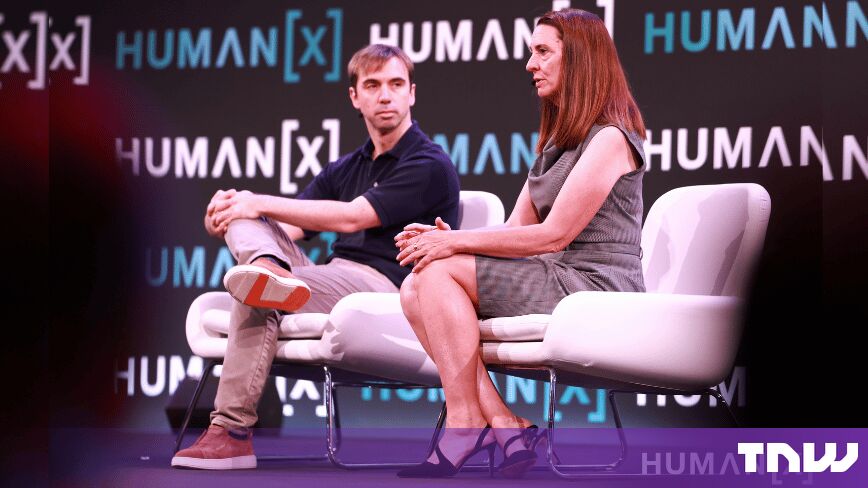

Booking.com’s chief business officer, James Waters, revealed that the company regrets building some of its AI tools in-house after frontier model makers later offered the same capabilities. Speaking at the HumanX conference in Amsterdam, Waters joined Diageo’s chief digital officer, Susan Jones, to discuss the challenges—and missteps—of deploying AI at scale. Their insights highlight the importance of focusing on customer problems, proprietary data, and human behavior rather than chasing AI trends.
30 SEC SUMMARY
- Booking.com’s chief business officer revealed the company regrets building some AI tools in-house, as frontier model makers later matched these capabilities.
- 89% of travelers want to use AI for research, but only 6% trust it to make decisions, highlighting a gap in AI adoption.
- Diageo uses a virtual content studio for its 200+ brands, with built-in regulatory guardrails to ensure compliance.
- Both Booking.com and Diageo emphasize focusing on customer problems and proprietary data over chasing AI trends.
- Neither company has a precise ROI for AI but continues to invest in its development.
TABLE OF CONTENTS
- Regrets over in-house AI development
- The trust gap in AI adoption
- Scaling AI with guardrails
- Focusing on customer problems, not AI hype
- Background: AI adoption in enterprise
- What this means
- Key takeaways
- FAQ
- Sources
KEY HIGHLIGHTS
- Booking.com built AI tools it now regrets developing in-house, as frontier model makers later offered similar capabilities.
- 89% of travelers want to use AI for research, but only 6% trust it to make decisions, highlighting a trust gap.
- Diageo uses a virtual content studio for its 200+ brands, with built-in regulatory guardrails to ensure compliance.
- Both companies emphasize solving customer problems with proprietary data over chasing AI trends.
- Neither Booking.com nor Diageo has a precise ROI for AI but continues to invest in its development.
Regrets over in-house AI development
According to The Next Web, Booking.com’s chief business officer, James Waters, revealed that the company built AI tools it now regrets developing in-house. These capabilities were later matched by frontier model makers, making the internal development effort seem like "regrettable work" in hindsight. The shift highlights a growing tension for companies deciding whether to build or buy AI solutions as external providers rapidly advance.
The trust gap in AI adoption
Despite enthusiasm for AI in travel, customer trust remains low. The Next Web reports that while 89% of travelers want to use AI for research, only 6% trust it to make decisions. This gap is particularly pronounced in high-stakes industries like travel, where decisions involve significant time, money, and emotional investment.
Large language models (LLMs) are now the fastest-growing travel research tools, but they are rarely used for bookings. While some hotel groups and platforms like Google Maps have experimented with AI-driven booking features, adoption remains limited. Booking.com avoids letting AI handle critical tasks like pricing or content accuracy, fearing errors could damage trust.
Scaling AI with guardrails
Diageo, the beverage giant behind over 200 brands, takes a different approach. According to The Next Web, its most scaled AI tool is a "virtual content studio," used across all markets and brands. Unlike Booking.com’s incremental adoption, Diageo integrates AI into its core operations—but with strict guardrails. Every piece of AI-generated content is reviewed by a human, and regulatory constraints are built into the tools from the start.
Diageo’s tool, Pencil, is positioned as a springboard for creativity rather than a way to cut costs. The company learned early that adding AI on top of existing processes without rethinking workflows was ineffective. Instead, it now focuses on tools that empower teams to work more efficiently while maintaining control.
Focusing on customer problems, not AI hype
Both Booking.com and Diageo emphasize that AI adoption should start with customer problems, not technology. Booking.com builds its AI products from high-intent searches—where users know what they want—toward more exploratory use cases. This approach minimizes risk while ensuring AI solves real pain points.
Diageo similarly puts tools directly into the hands of employees, allowing them to experiment and adapt AI to their needs. Neither company has a precise ROI figure for AI, but both treat it as a long-term investment. Booking.com, as a fully digital business, can measure the cost and impact of AI-driven changes more easily, but it still avoids tying AI to short-term financial metrics.
Background: AI adoption in enterprise
The challenges faced by Booking.com and Diageo reflect broader tensions in enterprise AI adoption. Companies must balance innovation with trust, scalability with control, and long-term potential with short-term risks. While AI tools are increasingly accessible, their integration into complex workflows—particularly in regulated industries—requires careful planning and human oversight.
Recent debates over AI governance, such as calls for global technical standards and concerns about security breaches, further complicate adoption. Companies like Oracle have faced scrutiny for aggressive AI infrastructure spending, highlighting the financial and operational risks of overinvesting in unproven solutions.
What this means
LazyFounders analysis — our interpretation, not reported fact.
For founders and operators, this story underscores a critical lesson: building AI tools in-house isn’t always the best use of resources. Booking.com’s regret over developing capabilities later matched by frontier model makers is a cautionary tale. It suggests that startups should carefully evaluate whether to build or buy AI tools, especially when external providers can offer scalable, cost-effective solutions.
The gap between interest in AI (89%) and trust in its decision-making (6%) is also telling. Customers are curious about AI but remain skeptical of its reliability, particularly in high-stakes areas like travel. This distrust isn’t just a technical challenge—it’s a behavioral one. Founders must prioritize transparency, human oversight, and incremental adoption to bridge this gap.
Diageo’s approach—embedding regulatory guardrails and positioning AI as a creativity tool rather than a cost-cutting measure—offers a practical blueprint. AI shouldn’t be forced into existing processes; instead, it should solve specific problems, ideally leveraging proprietary data. The lack of a precise ROI for AI at both companies also reinforces that AI is a long-term bet, not a quick fix. The focus should be on scalable, purposeful adoption rather than chasing hype.
Key takeaways
- Booking.com regrets building AI tools in-house that frontier model makers later replicated.
- Only 6% of travelers trust AI to make decisions, despite 89% wanting to use it for research.
- Diageo’s virtual content studio serves 200+ brands with built-in regulatory guardrails.
- AI adoption should focus on customer problems, proprietary data, and human behavior—not just technology.
- Neither Booking.com nor Diageo has a precise ROI for AI, but both continue to invest.
FAQ
Why does Booking.com regret building AI tools in-house?
Booking.com built AI tools internally only to see frontier model makers later offer the same capabilities. This made the internal development effort seem unnecessary in hindsight.
How do customers view AI in travel?
While 89% of travelers want to use AI for research, only 6% trust it to make decisions. This gap shows that AI is still seen as a helpful tool but not yet reliable for high-stakes choices.
How is Diageo using AI for its brands?
Diageo uses a virtual content studio powered by AI to support its 200+ brands. The tool, Pencil, is designed to enhance creativity rather than replace human input, with regulatory guardrails built in to ensure compliance.
Do Booking.com and Diageo measure AI’s ROI?
Neither company has a precise ROI figure for AI. Both view it as a long-term investment rather than a short-term financial win.
Related on LazyFounders
Sources
- The Next Web · 2026-09-24
Booking.com says it built AI tools it wishes it had bought off the shelf
This story is an original summary drafted with AI by LazyFounders from the reporting listed above and checked by automated validation. Facts are attributed to their original publishers; sections marked as analysis are LazyFounders's. Where a source is in another language, facts were machine-translated and quotations are reported, not reproduced. Read the original coverage via the links, and see our AI policy and corrections policy.
Get the LazyFounder Brief
Startup, funding and AI news in a five-minute read. Join the early-access list.