
Impact of AI on Job Creation: Insights from Nandan Nilekani
Discover insights from Nandan Nilekani on how AI will impact job creation in India, emphasizing the role of small businesses in future employment.
LazyFounders
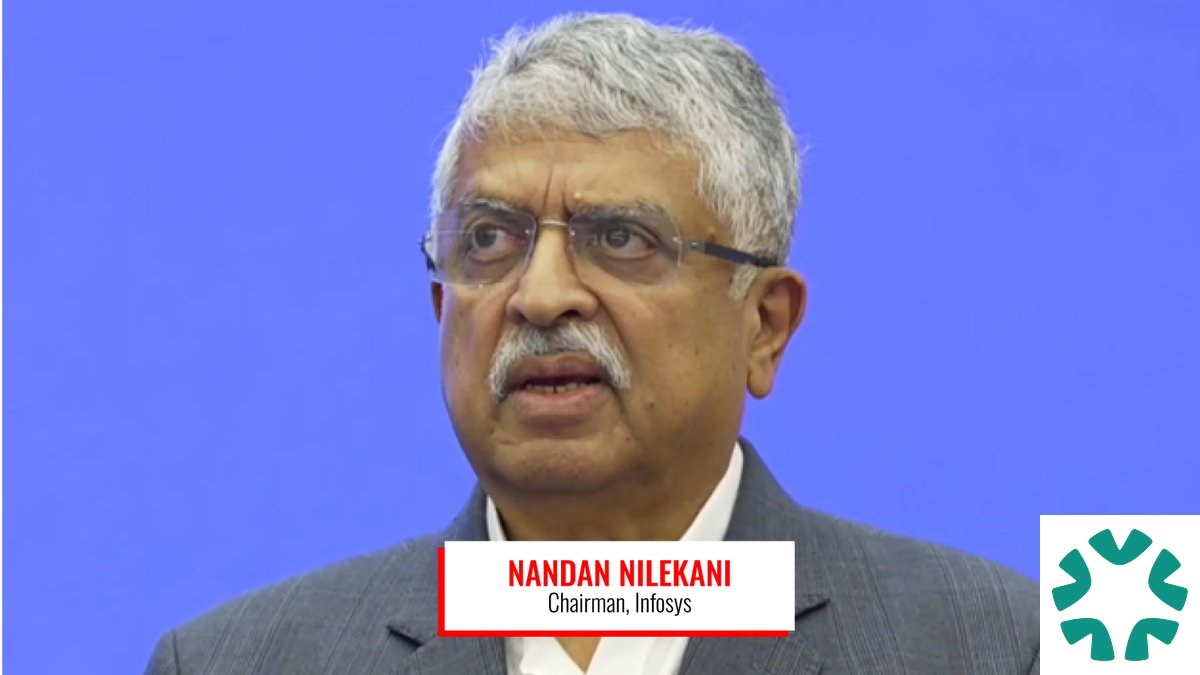

Impact of AI on Job Creation: Insights from Nandan Nilekani
30 SEC SUMMARY
- Nandan Nilekani predicts large corporations will become net job losers due to AI automation.
- Small businesses are projected to be the primary job creators in India.
- Nilekani advocates for deregulation and simplified business interfaces to support small entrepreneurs.
TABLE OF CONTENTS
- Introduction
- Nilekani’s Predictions
- The Role of Small Businesses
- Future of Job Creation
- Supporting Small Businesses
- Conclusion
- FAQs
Introduction
In a rapidly evolving technological landscape, the future of job creation is a topic of significant interest. Speaking at the NCAER India Policy Forum 2026, Infosys co-founder and Chairman of the Board of Governors of NCAER, Nandan Nilekani, shared his insights on how artificial intelligence (AI) will reshape the employment landscape in India.
Nilekani’s Predictions
Nandan Nilekani highlighted a fundamental shift in how India views job creation. According to him, large, well-structured corporations will likely become net job losers in the coming years due to the increasing automation of tasks.
"Large companies, which are very well structured, will actually be the most vulnerable to job loss, because every job is reduced to a few set of tasks. It's also easy to automate that and remove jobs. So, large companies actually will probably be net job losers in the coming years," Nilekani said.
The Role of Small Businesses
Contrary to the predictions for large corporations, Nilekani emphasized that small businesses will be the primary engine for future employment. He argued that small businesses are more resilient to the disruptions caused by AI.
"If you're millions of small companies, it's far more complicated to use AI to motivate them... they are actually more resilient or more impervious to job losses. And they will create more jobs," he added.
Future of Job Creation
Nilekani projected that India is on track to reach one million startups by 2035, a significant jump from the 1,50,000 currently in existence. He noted that rather than expecting a few companies to hire a million people, the economy will grow because “a million companies have one person each”.
Supporting Small Businesses
To support this transition, Nilekani emphasized the need for large-scale deregulation and simplified business interfaces. He noted that small entrepreneurs must be protected from being overburdened by regulation and provided with easier access to capital and markets through digital systems such as the RBI’s Account Aggregator and the Open Network for Digital Commerce (ONDC) platforms.
"We really have to rethink how job creation will happen," Nilekani said, adding that the traditional notion of a worker joining a company and staying for 40 years is becoming obsolete. He advocated for "portable benefits" and "portable credentials" to support a workforce that will increasingly operate within a gig economy and switch jobs frequently.
KEY HIGHLIGHTS
- Large corporations are likely to become net job losers due to AI automation.
- Small businesses are projected to be the primary job creators in India.
- Deregulation and simplified business interfaces are crucial for supporting small entrepreneurs.
- Digital platforms like RBI’s Account Aggregator and ONDC will facilitate easier access to capital and markets.
- The traditional long-term employment model is becoming obsolete; portable benefits and credentials are needed.
Conclusion
Nandan Nilekani’s insights underscore a significant shift in the employment landscape driven by AI and the growing importance of small businesses in job creation. As automation reshapes the job market, it is imperative to support small entrepreneurs through deregulation and digital platforms to foster a resilient and dynamic economy.
FAQs
What does Nandan Nilekani predict about large corporations and job creation?
Nandan Nilekani predicts that large, well-structured corporations will likely become net job losers in the coming years due to the increasing automation of tasks.
Why are small businesses expected to be the primary job creators?
Small businesses are more resilient to the disruptions caused by AI and are expected to create more jobs due to their complexity and resistance to automation.
What measures does Nilekani suggest to support small businesses?
Nilekani advocates for large-scale deregulation, simplified business interfaces, and easier access to capital and markets through digital platforms like the RBI’s Account Aggregator and ONDC.
Call-to-Action
For more insights and startup stories, visit blogy.in
Sources
- yourstory.com
Large firms to be net job losers, small businesses to drive employment: Nandan Nilekani
This story is an original summary and analysis written by LazyFounders from the reporting listed above. Facts are attributed to their original publishers; sections marked as analysis are LazyFounders's opinion. Where a source is in another language, facts were machine-translated and quotations are reported, not reproduced. Read the original coverage via the links.