PicoJool Raises $27.5M to Advance Optical Connectivity for AI Data Centers
PicoJool, a startup developing optical connectivity technology for AI data centers, has raised $27.5 million in a Series A funding round. The company aims to commercialize its VCSEL (Vertical Cavity Surface Emitting Laser) technology, which promises to improve bandwidth and energy efficiency in AI clusters.
Editor, LazyFounders
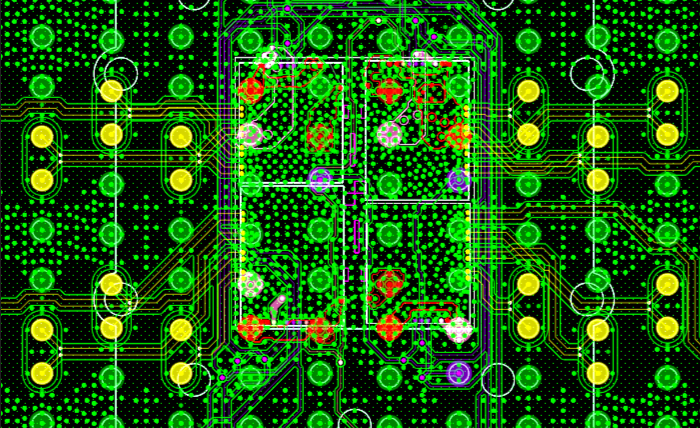

PicoJool, a startup developing optical connectivity technology for AI data centers, has raised $27.5 million in a Series A funding round. The company aims to commercialize its VCSEL (Vertical Cavity Surface Emitting Laser) technology, which promises to improve bandwidth and energy efficiency in AI clusters.
30 SEC SUMMARY
- PicoJool, a startup backed by former Intel CEO Pat Gelsinger, has raised $27.5 million in a Series A funding round led by Socratic Partners.
- The funding will advance PicoJool’s VCSEL (Vertical Cavity Surface Emitting Laser) technology for AI data centers, improving bandwidth and energy efficiency.
- PicoJool’s total funding now stands at $39.5 million, including a $12 million seed round led by Playground Global.
- The company develops high-speed 100G and 200G VCSEL products and low-power MicroVCSEL configurations for AI clusters.
- Funds will support team expansion in the U.S. and Taiwan and the commercialization of its optical chips and modules.
TABLE OF CONTENTS
- Funding and Investors
- Technology and Products
- Commercialization and Expansion
- Background
- What this means
- Key takeaways
- FAQ
- Sources
KEY HIGHLIGHTS
- PicoJool raises $27.5 million in a Series A round led by Socratic Partners, bringing its total funding to $39.5 million.
- The startup is developing VCSEL technology to enhance bandwidth and energy efficiency in AI data centers.
- PicoJool’s products include high-speed 100G/200G VCSEL and low-power MicroVCSEL configurations.
- The funding will support team expansion in the U.S. and Taiwan and the commercialization of its optical chips.
- PicoJool is working with chip foundries to prepare its 200G VCSEL for mass production.
Funding and Investors
PicoJool, a startup developing optical connectivity technology for AI data centers, has raised $27.5 million in a Series A funding round. According to SiliconANGLE, the round was led by Socratic Partners, with participation from Hudson River Trading. This brings the company’s total funding to $39.5 million, following a $12 million seed round led by Playground Global last November.
Technology and Products
PicoJool is focused on advancing VCSEL (Vertical Cavity Surface Emitting Laser) technology, which enables data transmission via light signals through optical cables. This approach is designed to replace traditional wired connectivity, offering improvements in bandwidth and energy efficiency for AI data centers. The company has developed optical chips and modules based on VCSEL technology, including high-speed 100G and 200G VCSEL products.
The startup also offers low-power MicroVCSEL configurations, such as 50G NRZ and 64G NRZ/PAM4 interconnects. These are built on a massively parallel architecture that aggregates bandwidth while reducing energy costs. According to SiliconANGLE, PicoJool claims its technology can achieve connectivity of up to 3.2 terabits per second of bandwidth, which could significantly enhance the performance of large AI chip clusters.
Commercialization and Expansion
The Series A funding will support PicoJool’s efforts to expand its teams in the U.S. and Taiwan. The company plans to use the capital to qualify its products with customers and transition its portfolio from chip-level VCSELs and MicroVCSELs to AOC (Active Optical Cable) and NPO (Near-Packaged Optics) modules.
PicoJool is also collaborating with chip foundries like WIN Semiconductors Corp. to prepare its 200G VCSEL for mass production. This partnership is expected to accelerate the commercialization of its technology for AI data center applications.
Background
AI data centers face increasing demands for faster and more energy-efficient connectivity as AI models grow in complexity and scale. Traditional wired connectivity solutions are often limited in bandwidth and power efficiency, creating opportunities for optical technologies like VCSEL to address these challenges. Startups in this space are racing to commercialize innovations that can support the next generation of AI infrastructure.
What this means
LazyFounders analysis — our interpretation, not reported fact.
PicoJool’s funding and technology focus reflect a broader trend in the AI infrastructure space: the need for faster, more efficient connectivity solutions. As AI models demand greater computational power, the limitations of traditional data center connectivity become more pronounced. VCSEL technology, with its potential for high bandwidth and energy efficiency, could be a game-changer for AI clusters, particularly if it delivers on its promise of terabit-scale performance.
For founders and operators, PicoJool’s progress highlights two key opportunities. First, the AI infrastructure market is far from saturated, and startups with differentiated hardware solutions can still attract significant funding. Second, the shift toward optical connectivity is gaining momentum, and companies that can bridge the gap between innovation and commercialization may have a competitive edge. However, success will depend on execution—scaling production, securing partnerships, and demonstrating tangible improvements in performance and cost efficiency.
Key takeaways
- PicoJool secured $27.5 million in Series A funding, bringing its total raised to $39.5 million.
- The startup is focused on VCSEL technology to enhance connectivity and energy efficiency in AI data centers.
- PicoJool’s products include 100G/200G VCSEL and low-power MicroVCSEL configurations for high-performance AI clusters.
- The funding round was led by Socratic Partners, with participation from Hudson River Trading.
- PicoJool is partnering with chip foundries like WIN Semiconductors Corp. to prepare its 200G VCSEL for mass production.
FAQ
What is VCSEL technology, and why is it important for AI data centers?
VCSEL (Vertical Cavity Surface Emitting Laser) technology enables data transmission via light signals through optical cables, offering higher bandwidth and energy efficiency compared to traditional wired connectivity. This is particularly important for AI data centers, which require rapid and efficient connectivity to support increasingly powerful AI models.
Who are PicoJool’s key investors?
PicoJool’s Series A round was led by Socratic Partners, with participation from Hudson River Trading. The company previously raised $12 million in a seed round led by Playground Global.
What products does PicoJool offer?
PicoJool develops high-speed 100G and 200G VCSEL products, as well as low-power MicroVCSEL configurations, including 50G NRZ and 64G NRZ/PAM4 interconnects. These products are designed to enhance connectivity and energy efficiency in AI data centers.
How will PicoJool use its Series A funding?
The funding will support team expansion in the U.S. and Taiwan, qualify products with customers, and transition PicoJool’s portfolio from chip-level VCSELs to AOC (Active Optical Cable) and NPO (Near-Packaged Optics) modules.
Sources
- SiliconANGLE · 2026-09-24
Pat Gelsinger-backed startup PicoJool raises $27.5M to boost bandwidth for AI clusters
This story is an original summary drafted with AI by LazyFounders from the reporting listed above and checked by automated validation. Facts are attributed to their original publishers; sections marked as analysis are LazyFounders's. Where a source is in another language, facts were machine-translated and quotations are reported, not reproduced. Read the original coverage via the links, and see our AI policy and corrections policy.
Get the LazyFounder Brief
Startup, funding and AI news in a five-minute read. Join the early-access list.