
Skyroot Aerospace: India's First Private Orbital Rocket Launch
Explore how Skyroot Aerospace, India's first private company, successfully launched its first orbital rocket in 2026. Learn about the challenges and triumphs faced by Pawan Kumar Chandana and his team.
LazyFounders

30 SEC SUMMARY
- Discover the journey of Skyroot Aerospace, India's pioneering startup that successfully launched its first private orbital rocket in 2026.
- Learn about the challenges faced by Pawan Kumar Chandana and his team in building a globally competitive deep tech company from India.
- Get insights into the future of India's New Tech Order with upcoming events like #TechSparks2026.
TABLE OF CONTENTS
Introduction
In 2026, Skyroot Aerospace made history by launching India's first private orbital rocket, marking a significant milestone in the country's space exploration journey. This groundbreaking achievement was not just a single success but a testament to the relentless efforts of Pawan Kumar Chandana, Co-founder and CEO, and his team.
Skyroot Aerospace's Journey
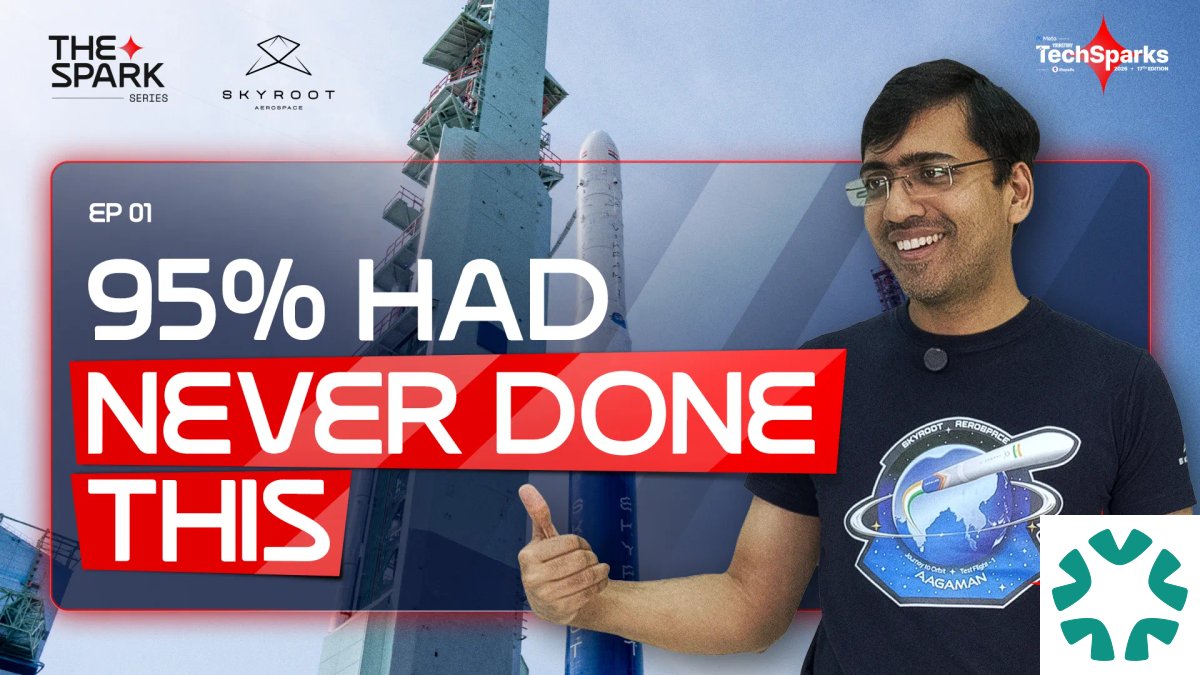
Skyroot Aerospace's journey began with no initial capital, no clear private-space policy, and limited talent. Despite these challenges, the team managed to develop and launch Vikram-1, India's first private orbital rocket. The launch was a 16-minute thriller, filled with extraordinary pressure and no room for error.
Challenges and Triumphs
Pawan Kumar Chandana describes the launch as a brutal experience, likening it to a 16-minute thriller movie. The success of Vikram-1 gave the team confidence but also highlighted the bigger challenge of achieving consistent success. The team faced numerous hurdles, including technological, financial, and regulatory challenges. However, their determination and innovative approach enabled them to overcome these obstacles.
The Bigger Challenge Ahead
For Skyroot Aerospace, the bigger challenge now is to maintain and build upon this success. Pawan emphasizes the need for consistent success to establish a globally competitive deep tech company from India. The team is now focused on developing advanced technologies and expanding their capabilities to meet global standards.
Upcoming Tech Events
Catch the Spark series in the run up to #TechSparks2026, where we explore the people, places, and technologies defining India's New Tech Order. From rocket factories and robotics labs to AI studios and deeptech startups, we're stepping inside the places where tomorrow's technologies are being imagined, engineered, and built.
TechSparks 2026 | Oct 13th, 14th, 15th | Taj Yeshwantpur, Bengaluru
KEY HIGHLIGHTS
- Skyroot Aerospace successfully launched India's first private orbital rocket in 2026.
- Pawan Kumar Chandana and his team faced numerous challenges but achieved remarkable success.
- The launch was a 16-minute thriller, highlighting the brutal nature of rocket launches.
- The team now aims for consistent success to establish a globally competitive deep tech company.
- Join #TechSparks2026 to explore India's New Tech Order.
FAQ Section
-
**Q: What was the biggest challenge faced by Skyroot Aerospace during the launch of Vikram-1? **A: The biggest challenge was the lack of initial capital, unclear private-space policy, and limited talent.
-
**Q: What does Pawan Kumar Chandana mean by 'consistent success'? **A: Consistent success means achieving regular and reliable milestones to establish a globally competitive deep tech company.
-
**Q: When and where is TechSparks 2026 taking place? **A: TechSparks 2026 is taking place on October 13th, 14th, and 15th at Taj Yeshwantpur, Bengaluru.
Conclusion
Skyroot Aerospace's successful launch of India's first private orbital rocket is a significant achievement that showcases the potential of deep tech startups in India. The journey ahead is filled with challenges, but with determination and innovation, Skyroot Aerospace is poised to make further strides in the global space industry.
Call-to-Action
Start your journey into the world of deep tech and innovation by visiting blogy.in.
Sources
This story is an original summary and analysis written by LazyFounders from the reporting listed above. Facts are attributed to their original publishers; sections marked as analysis are LazyFounders's opinion. Where a source is in another language, facts were machine-translated and quotations are reported, not reproduced. Read the original coverage via the links.