
Snap Specs vs. Xreal Aura: A Usability Test for AR Glasses
Snapchat’s Snap Specs and Xreal’s Aura AR glasses are vying for attention in a market still searching for its killer use case. A recent comparison by Gizmodo shifts the focus from flashy design to practical usability, examining how each device handles battery life, app access, and real-world functionality.
Editor, LazyFounders
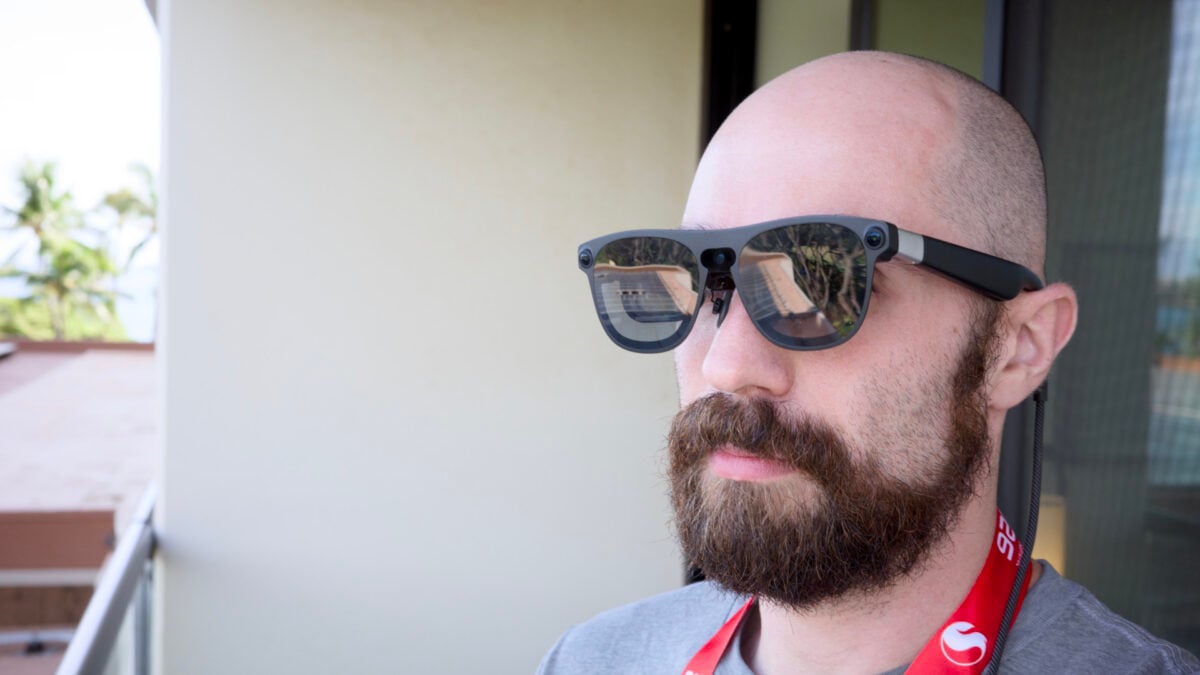

Snapchat’s Snap Specs and Xreal’s Aura AR glasses are vying for attention in a market still searching for its killer use case. A recent comparison by Gizmodo shifts the focus from flashy design to practical usability, examining how each device handles battery life, app access, and real-world functionality.
30 SEC SUMMARY
- Snapchat’s Snap Specs and Xreal’s Aura AR glasses are being compared for usability, not aesthetics.
- Xreal Aura offers 4-5 hours of battery life, while Snap Specs promise around four hours.
- Xreal Aura requires a phone-sized compute puck, while Snap Specs handle 6DoF processing internally.
- Snap Specs have a 51-degree FOV, compared to Xreal Aura’s 70-degree FOV.
- Snap Specs are priced at $2,195, while Xreal Aura is expected to cost under $1,500.
TABLE OF CONTENTS
- Usability Over Aesthetics
- Battery Life and Hardware Trade-offs
- App Ecosystems and Field of View
- Pricing and Target Audiences
- What this means
- Key takeaways
- FAQ
- Sources
KEY HIGHLIGHTS
- Snap Specs and Xreal Aura focus on usability, not aesthetics, in their latest designs.
- Xreal Aura offers 4-5 hours of battery life with a phone-sized compute puck; Snap Specs provide ~4 hours standalone.
- Snap Specs feature 6DoF processing internally, while Xreal Aura runs on Android XR, enabling full Android app access.
- Snap Specs have a 51-degree FOV; Xreal Aura delivers a wider 70-degree FOV.
- Snap Specs cost $2,195, while Xreal Aura is expected to price under $1,500.
Usability Over Aesthetics
According to Gizmodo, the latest AR glasses from Snap and Xreal are being evaluated primarily for usability rather than design or innovation. This shift in focus reflects a growing emphasis on practical applications for consumer AR devices, particularly in contexts like home entertainment or travel.
Battery Life and Hardware Trade-offs
Xreal’s Aura glasses deliver between four and five hours of battery life, depending on usage, but require a phone-sized compute puck to function. The puck also supports pass-through charging via two USB-C ports, mitigating some of the inconvenience of its bulk.
Snap’s Specs, meanwhile, promise around four hours of battery life with mixed use and handle six degrees of freedom (6DoF) processing entirely within the glasses. This eliminates the need for an external device but contributes to a higher price point.
App Ecosystems and Field of View
Xreal Aura runs on Android XR, allowing users to access the full suite of Android apps in an AR environment. This integration could make the glasses more appealing to consumers already invested in the Android ecosystem, though it does not yet match the polish of dedicated AR experiences.
Snap Specs, in contrast, offer a more self-contained experience but with a narrower field of view (FOV) at 51 degrees. Xreal Aura’s 70-degree FOV provides a more immersive visual experience, though both fall short of the peripheral coverage offered by virtual reality headsets.
Gizmodo notes that neither device is practical for everyday mobile use, with current applications limited to scenarios like in-flight entertainment or home media consumption.
Pricing and Target Audiences
Snap Specs are priced at $2,195, positioning them as a premium offering aimed at early adopters or enterprise users. The inclusion of two Qualcomm Snapdragon XR chips enables their standalone functionality but drives up costs.
Xreal Aura, expected to launch at under $1,500, targets a broader consumer base. It relies on the Qualcomm Reality Elite processor and the Android XR platform, prioritizing affordability and app accessibility over self-contained power.
What this means
LazyFounders analysis — our interpretation, not reported fact.
For founders and operators in the AR space, this comparison highlights a critical trade-off: integration vs. flexibility. Snap Specs prioritize self-contained processing, which simplifies user experience but limits app ecosystem access and increases cost. Xreal Aura, meanwhile, leans into Android XR’s open ecosystem, offering broader app compatibility and a lower price point but requiring an external compute puck.
The choice between these approaches depends on the target user. Snap’s model suits niche applications where seamless, standalone use is paramount—like enterprise or creative workflows. Xreal’s approach, however, could appeal to consumers who value affordability and familiar app experiences, even if it introduces friction.
This also underscores the broader challenge for AR glasses: practicality. Both devices remain constrained by battery life, field of view, and form factor, reinforcing that mainstream adoption is still years away. Founders should focus on use cases where AR solves a clear pain point—like in-flight entertainment or home media—rather than betting on mass-market appeal.
Key takeaways
- Snap Specs and Xreal Aura are designed for different user needs: Snap focuses on standalone functionality, while Xreal leverages Android XR’s app ecosystem.
- Battery life and field of view remain limiting factors for both devices, with neither exceeding five hours of use.
- Xreal Aura’s reliance on an external compute puck adds flexibility but introduces friction for mobile use.
- Snap Specs’ higher price ($2,195) reflects their self-contained 6DoF processing, while Xreal Aura aims for affordability under $1,500.
- Current AR glasses are best suited for stationary or in-home use cases, not yet for everyday mobility.
FAQ
Which AR glasses offer better battery life: Snap Specs or Xreal Aura?
Xreal Aura provides slightly longer battery life, ranging from four to five hours depending on usage. Snap Specs promise around four hours with mixed use.
Do Snap Specs require an external device to function?
No. Snap Specs handle six degrees of freedom (6DoF) processing internally, eliminating the need for an external compute puck.
Can Xreal Aura run standard Android apps?
Yes. Xreal Aura runs on Android XR, allowing users to access regular Android apps in an AR environment.
Which device has a wider field of view?
Xreal Aura offers a 70-degree field of view, compared to Snap Specs’ 51-degree FOV.
Are these AR glasses practical for everyday use?
According to Gizmodo, both devices are currently best suited for stationary or in-home use, such as in-flight entertainment or media consumption, rather than mobile or outdoor scenarios.
Related on LazyFounders
Sources
- Gizmodo · 2026-09-24
In the Race for the Dorkiest AR Glasses, Only One Seems Built for Today
This story is an original summary drafted with AI by LazyFounders from the reporting listed above and checked by automated validation. Facts are attributed to their original publishers; sections marked as analysis are LazyFounders's. Where a source is in another language, facts were machine-translated and quotations are reported, not reproduced. Read the original coverage via the links, and see our AI policy and corrections policy.
Get the LazyFounder Brief
Startup, funding and AI news in a five-minute read. Join the early-access list.