
Streamlining Payments: The Evolution of Payment Operations in 2026
Explore the evolution of payment operations in 2026. Discover how businesses are simplifying complex payment workflows and the role of AI in streamlining processes.
LazyFounders

30 SEC SUMMARY
In 2026, businesses are evolving their payment operations to handle complex workflows with ease. This article explores how AI is transforming payment processes, the importance of unified payment ecosystems, and the role of advanced technologies in simplifying financial operations.
TABLE OF CONTENTS
- Introduction
- The Complexity of Payment Operations
- The Hidden Costs of Fragmented Payment Operations
- Why Payments Deserve a Seat at the Strategy Table
- Bringing Payment Operations Together
- Growing with the Business
- Where AI Fits into Payment Operations
- Building for What's Next
- Conclusion
- FAQ Section
- Call-to-Action
KEY HIGHLIGHTS
- The evolution of payment operations in 2026
- The role of AI in simplifying payment processes
- The importance of unified payment ecosystems
INTRODUCTION
For most businesses, accepting the first payment is a milestone. As companies grow, the initial simplicity of payment processing transforms into a complex, multifaceted operation. In 2026, businesses are navigating this evolution by integrating advanced technologies to streamline their payment operations.
THE COMPLEXITY OF PAYMENT OPERATIONS
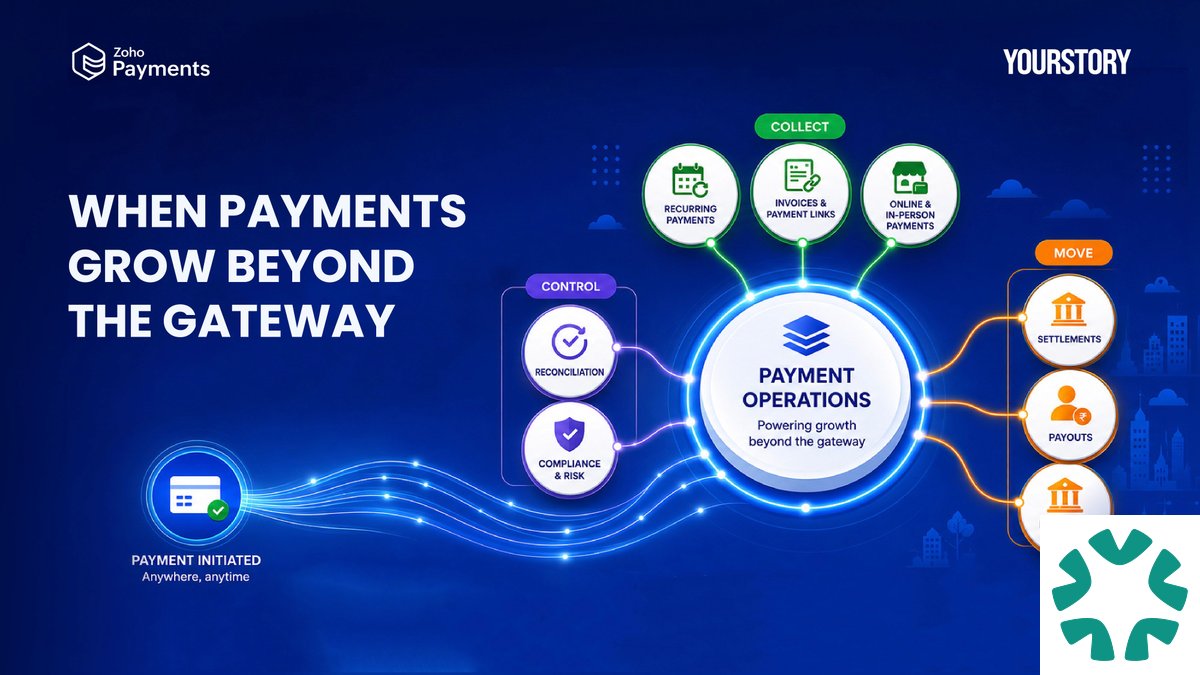
As businesses expand, the payment setup that once handled simple transactions now supports subscriptions, recurring billing, payment links, invoices, marketplaces, and in-person payments. Finance teams manage refunds, disputes, settlements, payouts, and multiple banking relationships. The operational complexity increases as businesses rely on manual reconciliation and multiple systems to track payment status, subscriptions, refunds, and cash movement.
THE HIDDEN COSTS OF FRAGMENTED PAYMENT OPERATIONS
Fragmented payment operations lead to significant hidden costs. Reconciliation becomes a manual task as finance teams match gateway records with bank statements and accounting systems. This complexity affects working capital, making it difficult to know the exact cash availability at any time. Payment success rates suffer as transactions fail on one gateway but succeed on another. Fraud detection becomes challenging when each provider sees only part of the payment picture.
WHY PAYMENTS DESERVE A SEAT AT THE STRATEGY TABLE
Payments are no longer just a commerce function but a critical component of broader financial and operational decision-making. Regulatory changes require businesses to adapt their payment infrastructure continually. Payment data strengthens fraud detection, supports customer segmentation, and contributes to underwriting decisions. The checkout experience influences whether a customer completes a purchase or abandons it.
BRINGING PAYMENT OPERATIONS TOGETHER
To manage the complexity, businesses are looking for unified platforms that connect all payment functions from the same data set. This connected view links transactions to invoices, subscriptions to mandates, and settlements to payments. In the Zoho ecosystem, these connections extend into financial workflows, reducing the need to move information manually between different systems.
GROWING WITH THE BUSINESS
The payment needs of a business on day one differ significantly from those of a business operating at scale. Early-stage businesses need a simple and reliable way to start accepting payments with minimal setup. As the business grows, requirements expand to include recurring billing, multiple payment methods across online and offline channels, payout visibility, and reconciliation processes. For larger businesses and marketplaces, challenges become more sophisticated, requiring tighter controls around reserves, user permissions, and risk thresholds.
WHERE AI FITS INTO PAYMENT OPERATIONS
Artificial intelligence is reshaping payment operations by reducing repetitive manual work and helping finance teams make faster decisions. AI automates reconciliation, matches payment gateway records with bank statements, and identifies anomalies. Technologies like Model Context Protocol (MCP) servers connect AI agents with payment workflows, allowing users to investigate failed transactions or initiate refunds using natural language. AI also categorizes transactions, matches bank-feed entries with invoices, and assembles supporting documentation for payment disputes.
BUILDING FOR WHAT'S NEXT
A business rarely knows its future trajectory. It may expand into subscriptions, launch a marketplace, open physical stores, or enter new markets. Payment regulations continue to evolve, requiring businesses to adapt their payment systems. Platforms like Zoho Payments are designed to support this progression, extending into recurring billing, collections, connected banking, settlements, payouts, and reconciliation.
CONCLUSION
In 2026, payment operations have evolved into a critical component of business strategy. Unified payment ecosystems and advanced technologies like AI are simplifying complex workflows, ensuring businesses can grow without unnecessary complexity.
FAQ SECTION
**Q: What are the hidden costs of fragmented payment operations? A: Fragmented payment operations lead to manual reconciliation, difficulties in managing working capital, lower payment success rates, and challenges in fraud detection.
**Q: Why are payments now part of broader financial and operational decision-making? A: Payments influence regulatory compliance, customer experience, fraud detection, customer segmentation, and underwriting decisions.
**Q: How is AI reshaping payment operations? A: AI automates reconciliation, identifies anomalies, connects AI agents with payment workflows, and categorizes transactions to reduce manual effort.
CALL-TO-ACTION
Ready to streamline your payment operations? Visit blogy.in to learn more about Zoho's solutions for unified payment ecosystems.
Sources
- yourstory.com
When payments grow beyond the gateway
This story is an original summary and analysis written by LazyFounders from the reporting listed above. Facts are attributed to their original publishers; sections marked as analysis are LazyFounders's opinion. Where a source is in another language, facts were machine-translated and quotations are reported, not reproduced. Read the original coverage via the links.