
Urban Company & Snabbit Surpass 100K Daily Jobs: Instant Home Services Profitability
Urban Company and Snabbit surpass 100K daily jobs in instant home services. Focus shifts to profitability, unit economics, and sustainable business models in 2026.
LazyFounders

30 SEC SUMMARY
Urban Company and Snabbit have crossed 100,000 daily jobs in instant home services. The focus is shifting from customer acquisition to improving unit economics and building a sustainable business model in 2026.
TABLE OF CONTENTS
Introduction
In the rapidly evolving landscape of instant home services, Urban Company and Snabbit have made significant strides in 2026. Both companies have surpassed 100,000 daily jobs, marking a pivotal milestone in their growth trajectories.
Urban Company's Milestone
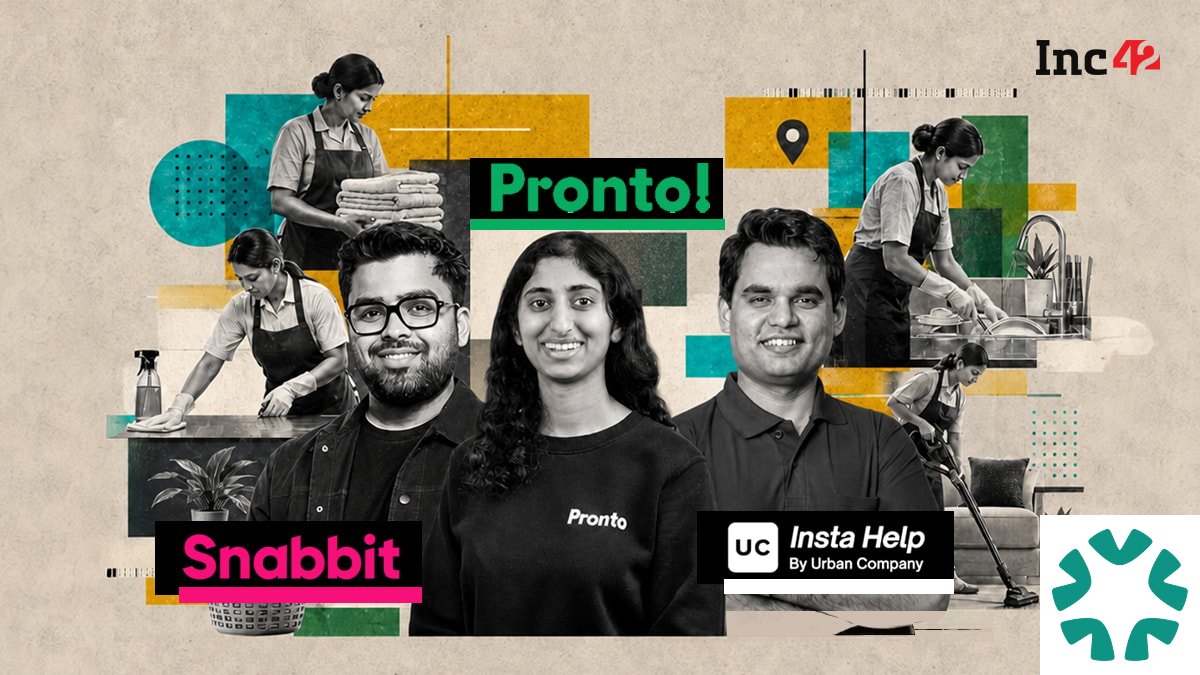
On August 2, 2026, Urban Company cofounder and CEO Abhiraj Singh Bhal announced that the company’s instant housekeeping service, InstaHelp, had crossed 1 Lakh daily delivered orders. This achievement highlights the company’s rapid expansion and operational success.
Snabbit's Growth Story
Hot on the heels of Urban Company’s announcement, Snabbit revealed it had reached a similar milestone, completing 1.15 Lakh jobs in a day. Snabbit’s rise from roughly 400 daily jobs to over 1.15 Lakh in under two years is equally noteworthy.
The Shift in Focus
The more interesting part of both announcements wasn’t the milestone itself. Instead of celebrating growth, both companies devoted a significant part of their updates to burn per order, neighborhood density, contribution margins, and customer willingness to pay.
Operational Efficiency and Profitability
As instant home services scale from a niche convenience to a mass-market habit, the conversation is shifting from demand creation to unit economics. Companies are no longer in the race to prove that consumers want a cleaner or cook in 10 minutes, but something bigger: Can the category deliver profitability?
Urban Company’s latest quarterly results show that InstaHelp remains an expensive business. The vertical generated ₹53 Cr in net transaction value in Q1 FY27 against an adjusted EBITDA loss of ₹132 Cr. However, the adjusted EBITDA loss per order improved to ₹346 during the quarter from ₹447 in Q4 FY26.
Snabbit has also built its entire operating strategy around denser micromarkets. Instead of spreading aggressively across cities, the startup has doubled down its efforts on individual micromarkets. Snabbit’s burn per job declined by more than ₹100 QoQ to below ₹250, while consolidated net order value after discounts crossed ₹130.
KEY HIGHLIGHTS
- Urban Company and Snabbit have surpassed 100,000 daily jobs in instant home services.
- The focus is shifting from customer acquisition to improving unit economics and building sustainable business models.
- Profitability hinges on operational efficiency, scale, and reducing customer acquisition costs.
FAQs
What is the current status of Urban Company’s InstaHelp service?
Urban Company’s InstaHelp service has crossed 1 Lakh daily delivered orders, showing significant growth and operational success.
How has Snabbit managed to reduce its burn per job?
Snabbit has focused on denser micromarkets, reducing travel distances and improving utilisation, which has helped lower its burn per job.
What are the key factors for profitability in instant home services?
Profitability in instant home services will depend on lower customer acquisition costs, higher utilisation, and moderating labour costs.
Conclusion
As instant home services continue to scale, the focus is shifting towards achieving profitability through operational efficiency and sustainable business models. Companies like Urban Company and Snabbit are leading the charge, setting the stage for a profitable future in this burgeoning market.
Call-to-Action
For more insights on the latest trends in technology and startups, visit blogy.in.
Sources
- inc42.com · 2026-08-06
Inside The Economics That May Make Or Break Instant Home Services
This story is an original summary and analysis written by LazyFounders from the reporting listed above. Facts are attributed to their original publishers; sections marked as analysis are LazyFounders's opinion. Where a source is in another language, facts were machine-translated and quotations are reported, not reproduced. Read the original coverage via the links.